
Binders like activated charcoal, zeolite, and bentonite clay can play a powerful role in helping the body eliminate unwanted substances — when the body's pathways are open first.
What "binders" are — and what they're not
Binders are substances that adsorb (attach to) unwanted compounds in the gut so they can be carried out in stool. People use them because they may reduce enterohepatic recirculation (the reabsorption loop through bile), support gut comfort, and gently lower overall toxin burden.
They're not a cure-all. Binders work best when the body's pathways are open first: hydration, minerals, healthy bile flow, regular bowel movements, and a calm(er) nervous system. If you want a personalized plan, tools like AO Scan biofeedback can help us see where your system may need gentle support.
Education only. This is not medical advice. Always separate binders from medications, and speak with your provider if you're pregnant, nursing, or managing a medical condition.
Quick takeaways
- Match the binder to the job (lipophilic/bile-bound vs. hydrophilic/gut-derived).
- Start low, go slow. Separate 2–3 hours from meds/supplements. Hydrate and re-mineralize.
- Ensure daily bowel movements before you start. If constipation appears, pause and support motility first.
- Pulse (e.g., 3–5 days on / 2 off) and reassess regularly.
How binders work (plain-English science)
- Adsorption vs. absorption: binders stick to targets via surface area, charge, and structure.
- Bile binding: many problem compounds ride in bile; capturing them in-gut may reduce recirculation.
- Why the nervous system matters: in fight-or-flight, the body may reroute blood away from digestion, lower stomach acid and enzymes, and tighten bile ducts — slowing motility and bile flow. In that state, binders can feel "heavy," and constipation or nausea are more likely. Shifting into rest-and-digest supports vagal tone, stomach acid, enzymes, bile release, and rhythmic motility — so binders move through as intended. Tools like AO Scan biofeedback and Cognomovement can gently support this downshift.
Binder safety: golden rules
- Timing: take binders 2–3 hours away from meds/supplements.
- Hydration & minerals: binders may grab electrolytes; consider trace minerals and salting food to taste.
- Motility first: if you're not having daily bowel movements, address that before starting.
- Who should get guidance: pregnancy/breastfeeding, bowel obstruction, active GI disease, significant kidney/liver disease, and shellfish allergy (for chitosan).
- Duration: use in short blocks or pulses; avoid indefinite daily use without a plan.
Which binder, when?
| Target / Goal | Best-fit binder | Why it may help | Key cautions |
|---|---|---|---|
| Broad GI adsorption / acute exposures | Activated Charcoal | High surface area; non-specific adsorbent | Can bind meds/nutrients |
| Lipophilic & bile-bound compounds / mycotoxins | High-Density Chitosan | Bile & fat-soluble binding tendency | Shellfish caution; may reduce fat-soluble nutrients |
| Ammonium & select metals; mold byproducts | Zeolite (clinoptilolite) | Cation-exchange capacity; cage-like structure | Source purity matters; not a stand-alone metals protocol |
| Tissue milieu & gentle daily support | PectaSol-C® Modified Citrus Pectin | Galectin-3 focus; gentle chelation support | Well-tolerated; still separate from meds |
| Gut soothing with mild binding | Aloe Vera Leaf (decolorized) | Demulcent polysaccharides | Avoid latex/anthraquinones; choose decolorized |
| Aflatoxins & broad cationic binding | Sodium Bentonite Clay | Swelling clay with negative charge | Can bind minerals; ensure clean sourcing |
When a simple, travel-friendly option makes sense, I often reach for Ultra Binder® Capsules by Quicksilver Scientific® — it combines multiple binder types in one formula, which may make dosing and timing easier for sensitive seasons. As always: start low, go slow, separate from meds/supps by 2–3 hours, hydrate, and re-mineralize. See it in my supplement list.
Binder profiles
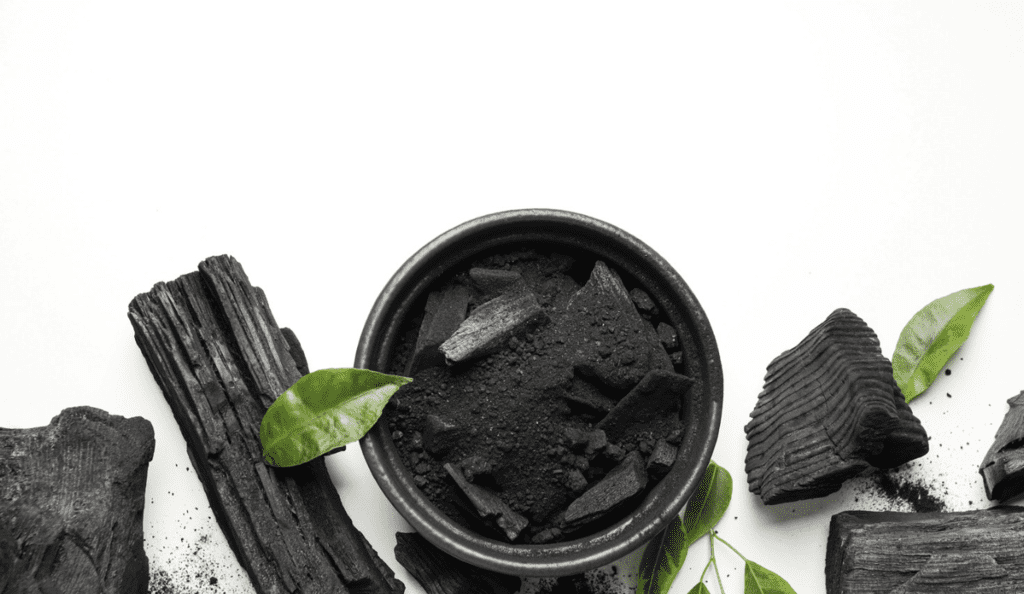
Activated Charcoal
What it is: carbon processed to maximize porous surface area.
May help with: broad GI adsorption, "oops" exposures, general gut comfort during protocols.
Pros / cons: powerful and versatile — but non-specific (can grab meds/nutrients) and may constipate.
How to use: start low; separate 2–3 hours from meds/supps; drink extra water; add minerals. Pairs well with soluble fiber (chia/psyllium) and bile-supportive foods (arugula, lemon, artichoke).
High-Density Chitosan
What it is: a deacetylated polysaccharide (often shellfish-derived; fungal sources exist).
May help with: lipophilic/bile-bound compounds and mycotoxin-leaning cases.
Pros / cons: targets bile-carried burdens — but shellfish-allergy caution, and may lower fat-soluble nutrients (A, D, E, K).
How to use: consider pulsing; support bile flow (bitters, gentle movement); space from fat-soluble vitamins.
Zeolite (Clinoptilolite)
What it is: a microporous aluminosilicate mineral with cation-exchange capacity.
May help with: ammonium and select metals; often well-tolerated for gentle, steady support.
Pros / cons: often gentle — but quality/purity vary (choose reputable sources), and it's not a lone heavy-metals protocol.
How to use: consistent low dosing; prioritize hydration; keep expectations realistic.
PectaSol-C® Modified Citrus Pectin
What it is: low-molecular-weight citrus pectin designed for absorption; noted for galectin-3 interactions.
May help with: healthy tissue remodeling, cardiovascular milieu, and gentle detox.
Pros / cons: GI-friendly and suitable for longer arcs — still separate from meds; watch for rare citrus sensitivity.
How to use: daily rhythms work well; pairs with fiber-rich foods (cooked apples/pears, kiwi).
Aloe Vera Leaf (Decolorized / Inner Fillet)
What it is: demulcent polysaccharides that soothe and "coat" GI tissues.
May help with: gut comfort alongside mild binding; easing friction during protocols.
Pros / cons: calming to the gut — but avoid latex/anthraquinones (choose decolorized/inner fillet only).
How to use: with meals; can stack with other demulcents like marshmallow or slippery elm.
Sodium Bentonite Clay
What it is: a swelling clay with a negative charge that can bind cationic compounds (e.g., aflatoxins).
May help with: mycotoxin-leaning contexts; broad cationic binding.
Pros / cons: effective surface chemistry — but may bind minerals; ensure clean, tested sourcing and avoid overuse.
How to use: short blocks; ample water; re-mineralize (trace minerals, mineral-rich foods).
A gentle binder protocol
- Prepare pathways first — hydration, minerals, daily bowel movements, light movement, breathwork.
- Choose one primary binder based on your goal; start low and observe.
- Layer support — soluble fiber (chia/psyllium), magnesium (glycinate/citrate) as needed for motility.
- Pulse — for example, 3–5 days on / 2 off, or weekdays on / weekends off.
- Reassess every 2–4 weeks — adjust type/timing/dose; consider AO Scan biofeedback to personalize.
The nervous system difference
A regulated nervous system supports bile release, peristalsis, lymph flow — and your sense of safety. That's why we start with simple practices (box breathing, peripheral vision drills, gentle figure-8 tracking, Cognomovement minis) before layering binders. If you'd like a full, stepwise plan built around your body, a free discovery call is the place to start.
Troubleshooting
- Constipation, headache, fatigue, skin flares: reduce dose or pause; increase water/minerals; add magnesium or fiber; gentle lymph support (walking, rebounding, dry brushing).
- No benefit felt: re-target (charcoal vs. zeolite, bile support for chitosan, MCP for longer-arc support); ensure bile flow and gut integrity first.
- Sensitivity: micro-dose; switch binder class; shorter pulses and slower titration.
FAQs
What are the best binders if I'm sensitive?
Start with the gentlest options: PectaSol-C® MCP or a quality zeolite in low amounts, with excellent hydration and clear motility. Then consider layering others if needed.
Activated charcoal vs. zeolite — what's the difference?
Charcoal is a broad adsorbent that can grab many compounds (and nutrients/meds). Zeolite uses cation exchange and a cage-like structure, often favored for ammonium and certain metals. Many plans use one at a time based on goals and tolerance.
What are modified citrus pectin benefits beyond detox?
MCP is known for its galectin-3 focus and may support healthy tissue remodeling and cardiovascular milieu, while offering gentle detox support suitable for longer-arc protocols.
How do I use binders with meds and supplements?
Separate by 2–3 hours from medications and important supplements. Hydrate well and consider adding trace minerals.
Can I combine binders, and for how long?
Sometimes — but simpler is safer. Choose one primary binder, pulse, and reassess every 2–4 weeks. Avoid indefinite daily use without a plan.
Written by Helen Parde, LMT — Integrative Health Facilitator at Whole Body and Sole, Herriman & South Jordan, Utah.